Eye protection markings: how to read EN 166
The marking format
EN 166 is the European standard for personal eye protection — spectacles, goggles and faceshields. Each item carries a marking that combines the optical class, the mechanical (impact) strength symbol, and one or more field-of-use codes.
Impact grade
The mechanical strength symbol is the letter after the optical class: F is low-energy impact (a 6 mm, 0.86 g ball at 45 m/s), B is medium-energy (120 m/s), and A is high-energy (190 m/s). Most industrial spectacles are F or B; A is for high-risk tasks.
Field-of-use codes
The single-digit codes describe the environment: 3 for liquids (drops or splashes), 4 for coarse dust, 5 for gas and fine dust, 8 for short-circuit electric arc, and 9 for molten metal and hot solids. Welding requires separate shade filters rated under EN 169 / EN 175 / EN 379.
Spectacles vs goggles vs faceshields
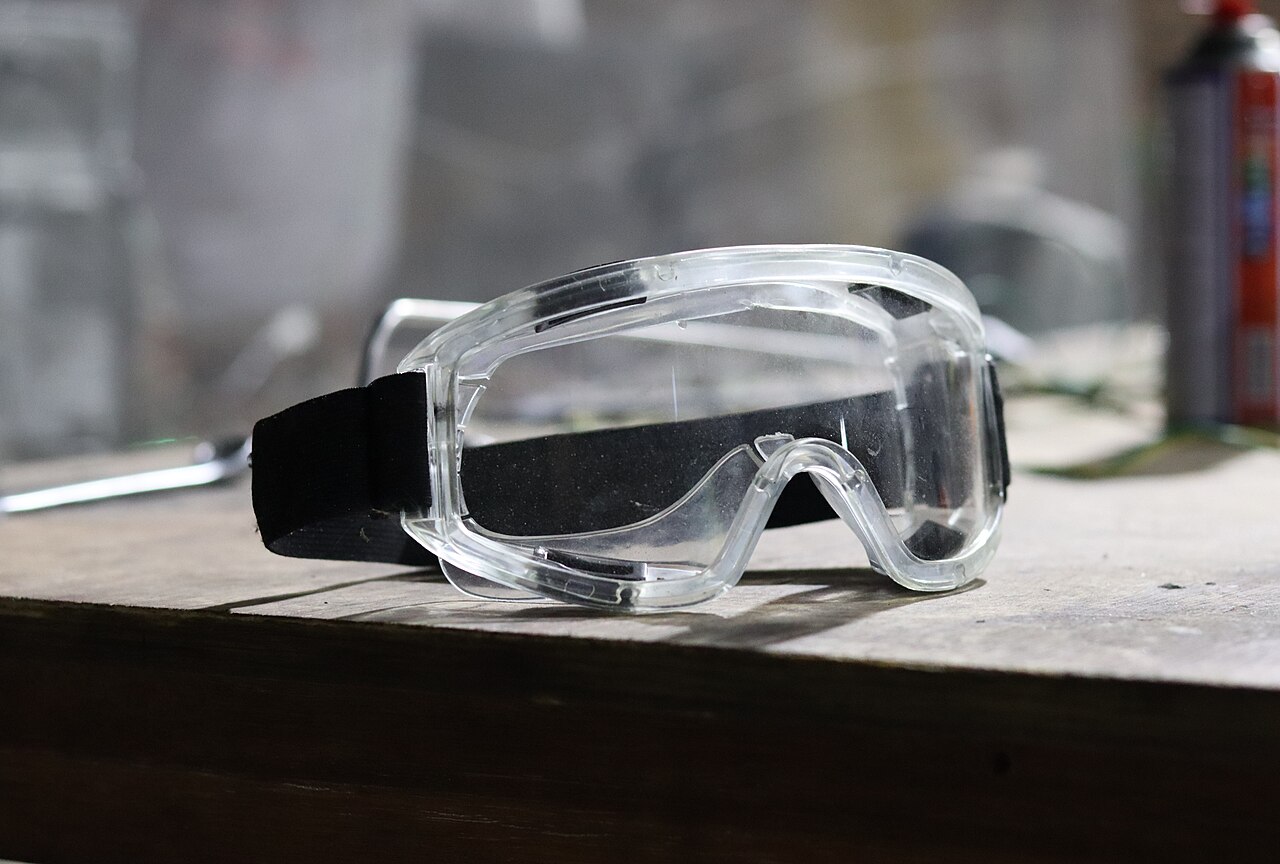
Sealed goggles protect against dust and splash where spectacles would let particles in around the edges. A faceshield alone does not provide impact protection to the eyes — it must be worn over spectacles unless it is itself certified as full eye protection.
Tests conducted: EN 166
How Mallcom tests its products to this standard.
Optical tests (EN 167)
The optical tests detailed in EN 167 ensure that no form of protective eyewear will unacceptably distort or restrict the wearer’s vision, and include checking for spherical, astigmatic and prismatic refractive powers. Other test methods include assessment of light diffusion and variations in luminance transmittance.
Non-optical tests (EN 168)
Non-optical tests covered in EN 168 include a field of vision to ensure that frames do not unacceptably impede peripheral vision.
Physical properties
Physical property tests ensure that the eyewear provides the mechanical protection claimed and remains fit for use after normal wear and tear.
Robustness
As an absolute minimum for robustness, oculars must withstand a force of 100N (approximately 10kg) applied via a 122mm diameter steel ball, without breakage or excessive deflection. Where increased robustness is needed, the steel ball is projected to impact the defined points on the frame and oculars under high and low-temperature conditions (55ºC +/- 2ºC and -5ºC +/- 2ºC).
Ignition resistance
Safety eyewear is tested for resistance to ignition using a heated probe at 650ºC. A steel rod is heated to the required temperature and the heated end face is pressed onto all parts of the test sample except elastic headbands and textile edgings.
Corrosion resistance
Corrosion resistance tests involve immersing the sample in a solution of sodium chloride (salt) at both boiling point and room temperature. The sample is then dried off and checked visually 24 hours later for any corrosion. Other tests include assessing the usability of the eye protector after exposure to ultraviolet light originating from strong sunlight or welding arcs.
Light transmittance
A transmittance of light is an important parameter. Measurements have shown that ordinary reading glasses with no protective properties may reduce the light reaching the eye by around 10 percent and lightly tinted reading glasses can reduce light by 40 percent. Protective eyewear can similarly reduce vision in low light conditions. The measuring equipment used provides a highly controlled beam of light that is collected by a detector. The detector is calibrated for 100 percent transmittance with no ocular (the transparent glass or plastic component) in position. The ocular is then placed in front of the detector to interrupt the light beam and the reduced light collected is measured.