Heat and cold gloves: EN 407 and EN 511
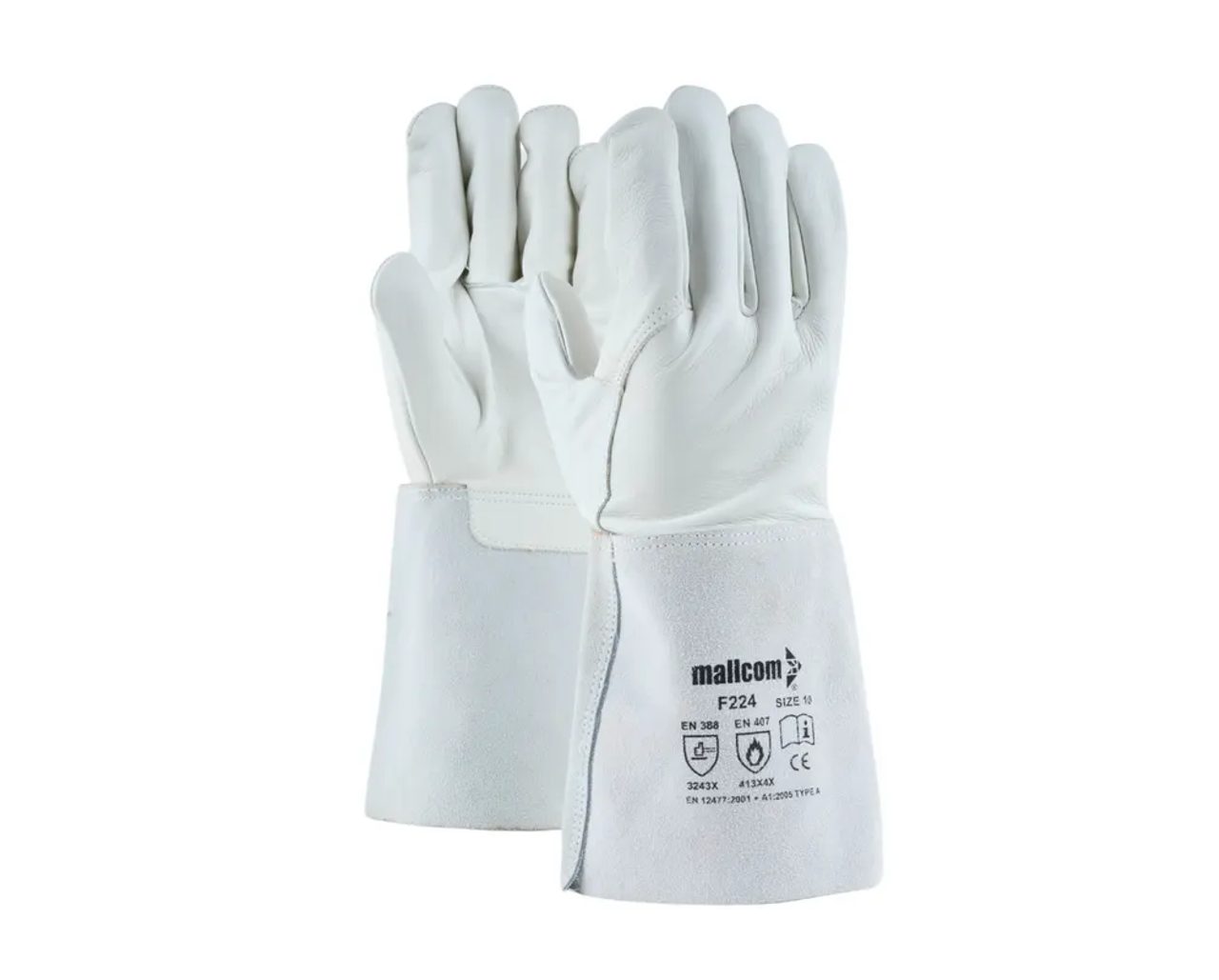
EN 407: thermal risks
EN 407 covers gloves that protect against heat and fire. The marking carries six digits, one per test: burning behaviour (flammability), contact heat, convective heat, radiant heat, small splashes of molten metal and large splashes of molten metal. Each is scored from 1 to 4, with 4 the best; an X means that test was not done.
EN 511: cold
EN 511 covers gloves that protect against cold. The marking carries three digits: convective cold and contact cold, each scored from 0 to 4, and water penetration, scored 0 (fail) or 1 (pass). An X means the test was not done.
Reading the marking
The digits sit under the pictogram, in the order above. Read the digit for the hazard on your site rather than the highest number: a foundry needs the molten-metal digits, someone handling hot parts needs contact heat, and cold-store work needs contact cold.
Tests conducted: EN 407
How Mallcom tests its products to this standard.
Flammability
The glove’s material is stretched and lit with a gas flame. The flame is held against the material for 15 seconds. After the gas flame is distinguished, the length of time is measured for how long the material either glows or burns.
Contact heat
The glove’s material is exposed to temperatures between +100°C and +500°C. The length of time is then measured for how long it takes the material on the inside of the glove to increase by 10°C from the starting temperature (approx. 25°C). 15 seconds is the minimum accepted length of time for approval. For example: to be marked with class 2, the glove’s inside material must manage 250°C heat for 15 seconds before the material exceeds 35°C.
Convective heat
The amount of time is measured for the heat from a gas flame (80Kw/kvm) to increase the temperature of the glove’s inside material by 24°C.
Radiant heat
The glove’s material is stretched in front of a heat source with an effect of 20-40 kw/kvm. The average time is measured for heat penetration of 2.5 kw/kvm.
Small splashes of molten metal
The test is based on the total number of drops of molten metal required to increase the temperature by 40°C between the inside of the glove and the skin.
Large splashes of molten metal
Molten metal is then poured over the glove material. The total number of grams is measured by how much molten metal is required to damage the simulated skin.
Tests conducted: EN 511
How Mallcom tests its products to this standard.
Convective cold
This is measured based on the transfer of cold through the glove via convection. A model hand heated to body temperature is subjected to a cold room; the resistance to the room’s climatic temperature and also the energy required by the hand to maintain a constant temperature are both measured to arrive at a final score.
Contact cold
This measures how protective the gloves is when it put into direct contact with a cold object or source. The sample is placed between a warm plate and a cold plate before an extractor fan is used to cool both plates further, the results are then compared to a reference standard and a final level decided.
Water permeability
These tests ensure that your hands will be completely safe from water seeping in and is simply a pass or fail - if the glove cannot withstand water permeating its fabric after 30 minutes of exposure it will fail. Receiving a Level 0 on this test does not necessarily mean these gloves do not perform highly in the other two areas and can still earn them accreditation. All gloves that achieve this standard must also pass at least level 1 of the EN 388 abrasion tests, so you can be sure your hands are in good gloves.